


























KPA Expands Quay Capacity As Cargo Volumes Surge
As cargo volumes at the Port of Mombasa continue to grow, the Kenya Ports Authority (KPA) is accelerating investments in critical infrastructure to ensure the port remains capable of handling rising regional trade demand.
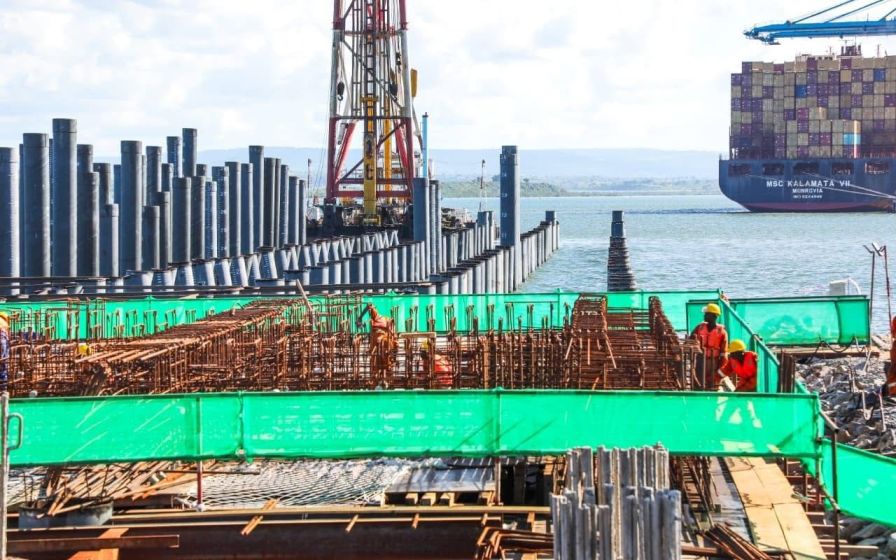
At the centre of these efforts is the construction of Berth 19B, a major expansion project expected to significantly boost the port’s capacity and operational efficiency.
The project follows the signing of a contract last year between KPA and the Chinese state-owned contractor, China Communications Construction Company (CCCC), for the development of the new berth.
The investment forms part of KPA’s long-term strategy to modernize port infrastructure, improve vessel turnaround times, and position Mombasa as a leading maritime hub in Africa.
Once completed, Berth 19B will add 240 metres of quay length and provide a water depth of 15 metres, enabling the port to accommodate larger container vessels of up to 45,000 deadweight tonnes.
The additional berth capacity is expected to support shipping lines increasingly deploying larger vessels to East Africa while easing pressure on existing facilities.
The project goes beyond the construction of the berth itself. It includes quay wall development, dredging works to deepen navigation channels, expansion of container storage yards, and the installation of supporting port infrastructure. These complementary investments are expected to enhance cargo handling efficiency and integrate seamlessly with existing terminal operations.
According to KPA Managing Director Captain William Ruto, the berth expansion is a strategic response to growing trade volumes and increasing demand for efficient port services.
“The development of Berth 19B is a critical step in reinforcing the Port of Mombasa as a key trade gateway for the region. This investment will ease congestion, improve vessel turnaround times, and increase annual handling capacity by an additional 300,000 Twenty-foot Equivalent Units (TEUs),” he said.
The expansion comes at a time when the Port of Mombasa is recording strong growth across key performance indicators.
Between January and December 2025, the port handled 45.45 million metric tonnes of cargo, representing an increase of 4.46 million tonnes compared to 2024.
Container traffic reached 2.11 million TEUs, surpassing the two-million mark for the second consecutive year and underscoring Mombasa’s growing role in regional and international trade.
Transit cargo destined for neighbouring countries, including Uganda, Rwanda, the Democratic Republic of Congo, and South Sudan, also registered robust growth, rising to 15.88 million tonnes.
Industry stakeholders have welcomed the berth expansion, describing it as a timely intervention that will strengthen regional logistics networks and support trade facilitation across East and Central Africa.
In an earlier interview, the Federation of East African Freight Forwarders Associations (FEAFFA) Executive Director Elias Baluku said the project would deliver substantial benefits to cargo owners, transporters, and logistics service providers throughout the region.
"The construction of Berth 19B is a significant milestone in enhancing the efficiency and capacity of our regional ports. This development aligns with the growing demands of trade in East Africa and will greatly improve cargo handling, reducing congestion and turnaround times at the port,” he said.
The Port of Mombasa remains the principal gateway for international trade in East and Central Africa, serving a hinterland market of more than 300 million people.
Continuous investments in modern cargo handling equipment, digital systems, terminal infrastructure, and berth expansion projects have enabled the port to keep pace with growing trade volumes while maintaining operational efficiency.