


























AUDA-NEPAD Opens DRC Office to Drive Projects and Investment
The African Union Development Agency-New Partnership for Africa’s Development (AUDA-NEPAD) is establishing a permanent office in the Democratic Republic of Congo (DRC), creating a country-level platform to accelerate priority development projects, strengthen partnerships, and mobilize investment.
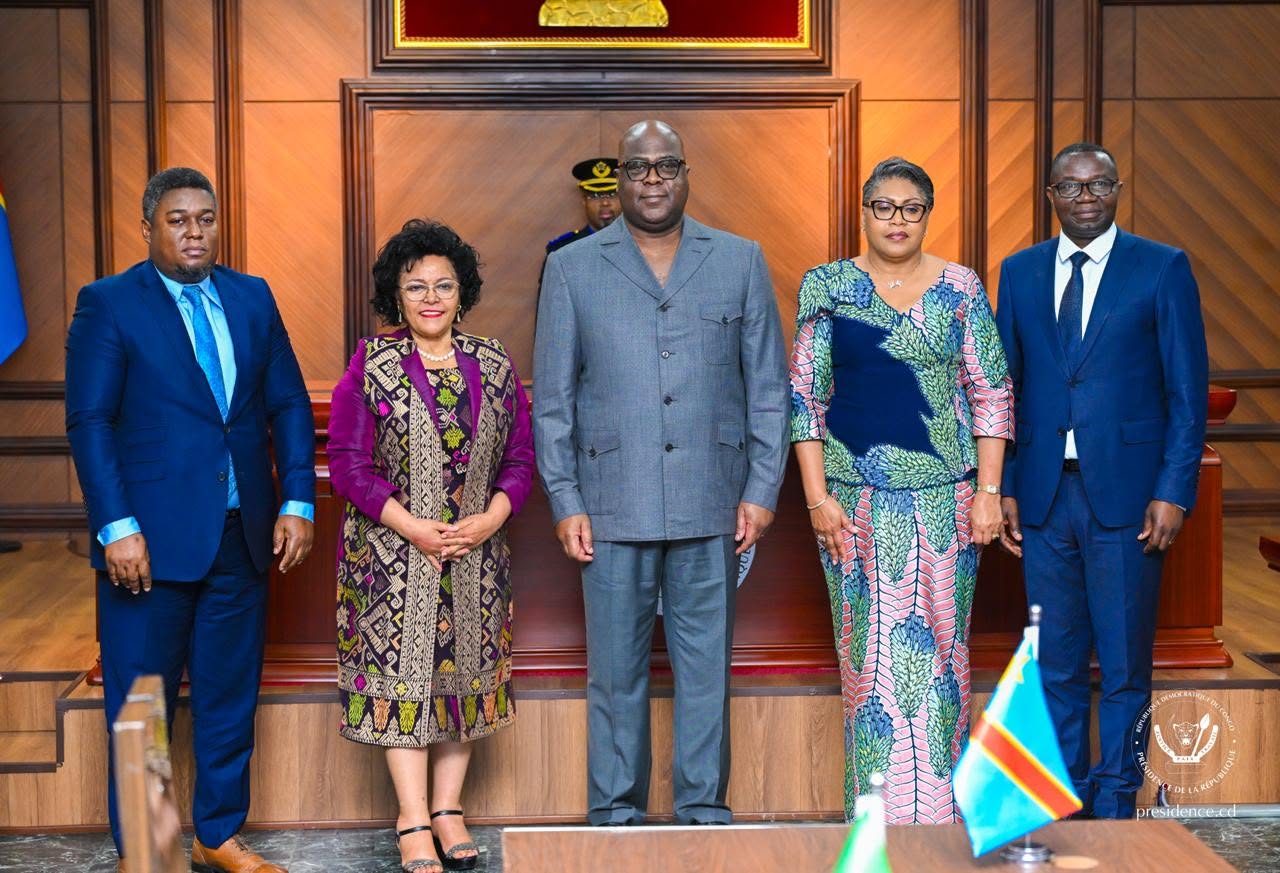
The agreement establishing the office was formalized in the presence of President Félix Tshisekedi and AUDA-NEPAD Chief Executive Officer Nardos Bekele-Thomas, who announced the development in a social media post last Friday.
Bekele-Thomas said the new office would bring AUDA-NEPAD’s work closer to the priorities of the Congolese government and provide a stronger platform for advancing strategic projects and attracting investment.
“The establishment of the AUDA-NEPAD office in the DRC will bring our work closer to the priorities of the government, supporting the advancement of priority projects, stronger partnerships, and investment stabilization,” she said.
The move reflects AUDA-NEPAD’s growing focus on moving beyond policy coordination towards project preparation, implementation, and financing. The agency has increasingly positioned itself as a bridge between governments, investors, and development finance institutions, particularly in infrastructure, industrialization, and regional integration.
In February, AUDA-NEPAD joined the African Union Commission and African multilateral financial institutions in launching the African Infrastructure Financing Facility. The platform is designed to mobilize long-term capital for cross-border infrastructure projects aligned with the African Union’s Agenda 2063.
Bekele-Thomas has also emphasized the need for African countries to link access to international markets with productive capacity, infrastructure, finance, and regional value chains.
Speaking to African ambassadors in China in April, she said AUDA-NEPAD should play a greater role in connecting market opportunities with bankable projects, infrastructure development, and industrialization.
The approach is particularly significant for the DRC, one of Africa’s richest countries in natural resources. The country has attracted substantial foreign investment into its mining sector, particularly copper and cobalt, but inadequate infrastructure and limited domestic processing capacity continue to constrain its ability to capture greater value from its mineral wealth.
The new AUDA-NEPAD office could therefore provide a permanent platform for closer cooperation between the agency, government ministries, development institutions, investors, and other private-sector partners.
Its role will include supporting the development of projects identified by the DRC government as national priorities and helping create partnerships capable of moving those projects towards implementation and financing.
The DRC’s position in international trade also strengthens the case for such an approach. China is among the country’s major trading partners, with exports dominated by minerals.
AUDA-NEPAD has increasingly advocated for African economies to use access to major international markets to support local processing, manufacturing, and the development of regional value chains rather than relying predominantly on exports of raw commodities.
For the DRC, the success of the new office will ultimately depend on its ability to translate government priorities into commercially viable projects that can attract financing and move into implementation.
The establishment of the DRC office, therefore, marks another step in the agency’s effort to strengthen its presence at the country level and help convert Africa’s development priorities into projects that can attract capital, create productive capacity, and support long-term economic growth.