


























Mombasa’s Maritime Gateway: Cooperation, Connectivity and the Race for Regional Cargo
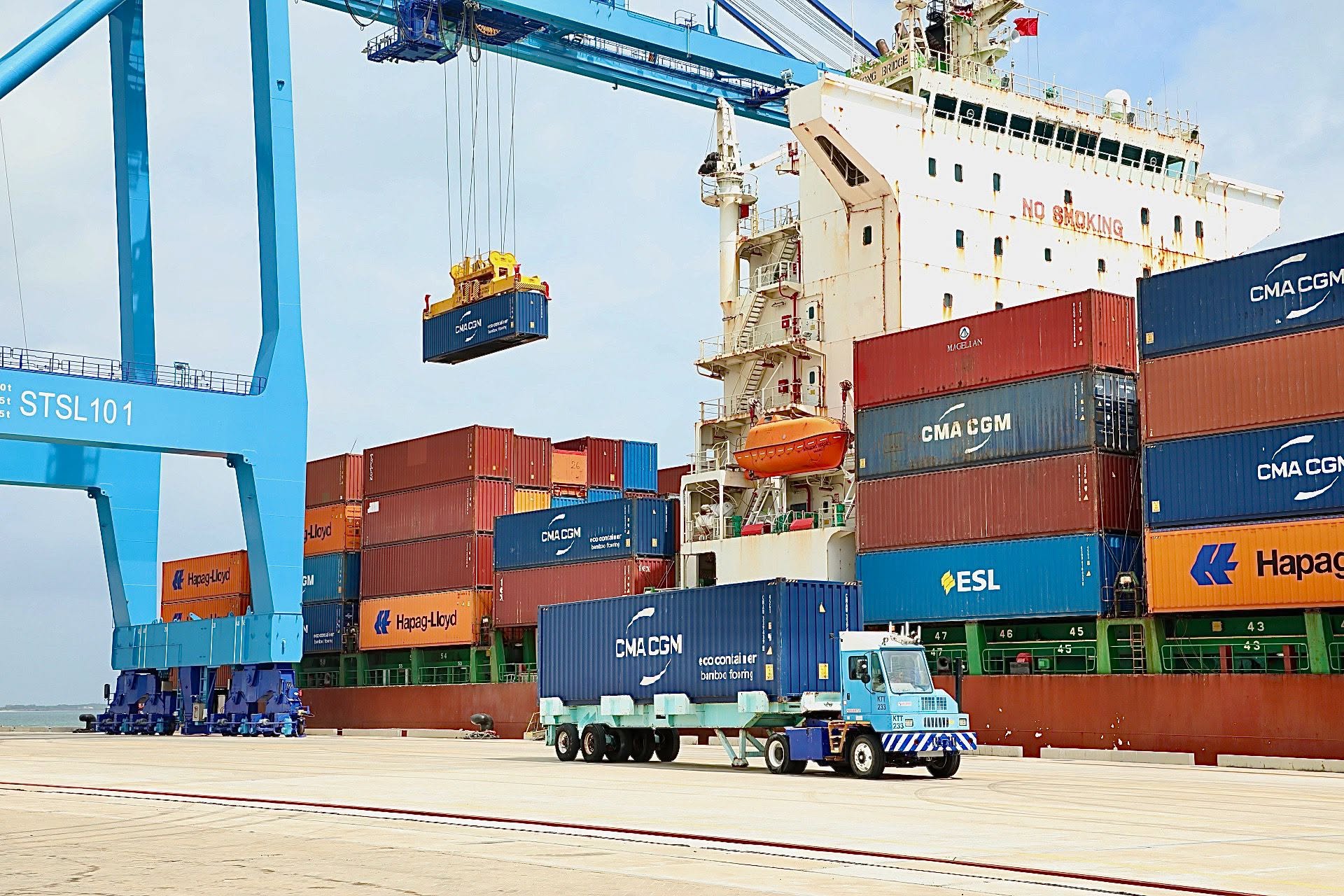
New berths, digital systems, inland logistics hubs and rail links are expanding Mombasa’s reach, while MOESNA’s regional maritime cooperation agenda seeks to connect the port more efficiently with the hinterland and strengthen Africa’s trading corridors.
The future of the Port of Mombasa is increasingly being determined beyond the quay.
As Kenya’s principal Indian Ocean gateway handles growing volumes of domestic and transit cargo, its competitiveness will depend not only on how efficiently ships are served, but also on how quickly containers leave the terminal, move through inland logistics facilities, cross borders and reach markets in Uganda, Rwanda, South Sudan, Burundi and eastern Democratic Republic of Congo (DRC).
This is placing the relationship between maritime and hinterland efficiency at the centre of the Northern Corridor’s future.
The Port of Mombasa handled 45.45 million tonnes of cargo in 2025, compared with 40.99 million tonnes in 2024. Container traffic rose to approximately 2.11 million Twenty-Foot Equivalent Units (TEUs), while transit cargo increased by 19.5 per cent to 15.88 million tonnes.
Uganda remains the principal transit market, but Rwanda, South Sudan, Burundi and eastern DRC offer significant opportunities for further growth. The challenge, therefore, is no longer simply to handle more cargo. It is to move that cargo faster, more predictably and at a competitive cost from the ship to the final customer.
This is where the work of the Maritime Organization for Eastern, Southern and Northern Africa (MOESNA) becomes increasingly important. MOESNA’s approach recognizes that maritime efficiency cannot be achieved by improving individual ports in isolation. It requires stronger connections between shipping services, ports, inland transport, logistics infrastructure, border crossings, trade routes and the markets they serve.
Its regional role is to help member states and maritime stakeholders address common challenges through cooperation, knowledge sharing, policy coordination, capacity building and initiatives designed to strengthen maritime trade.
For Mombasa, this broader perspective is critical because the port’s market extends far beyond Kenya’s coastline into the wider Great Lakes region.
As cargo volumes continue to rise and demand for efficient handling of both domestic and transit traffic grows, expanding port capacity has become essential to maintaining Mombasa’s competitiveness and accommodating future regional trade. At the centre of this expansion programme is Berth 19B, a 240-metre facility being developed at Container Terminal 1.
The berth is designed to accommodate larger vessels and is expected to add approximately 300,000 TEUs to annual container-handling capacity when completed. Physical progress is currently approximately 47.85 per cent. The additional capacity should enable port to accommodate more vessel calls while providing shipping lines and cargo owners with greater operational flexibility.
KPA is also developing Berths 23 and 24. The feasibility study for Berth 23 has been completed, as has the Environmental and Social Impact Assessment (ESIA), with the requisite licence obtained. These projects will provide additional capacity as they are delivered and represent an important investment in the future of the Northern Corridor.
But their ultimate value will not be determined by the number of berths constructed. It will be determined by how efficiently the additional cargo can be transferred from the maritime gateway into the hinterland.
This is the point at which MOESNA’s regional perspective becomes particularly relevant. MOESNA promotes and coordinates the shipping and maritime interests of its member states while facilitating maritime trade, advocating competitive shipping costs and efficient maritime services and promoting multi-modal connectivity.
The organization's work recognizes that an efficient maritime gateway must be connected to the wider transport and logistics system. For Mombasa, this means that efficiency at the berth must be linked to efficiency at the terminal gate, on the railway, on the road network, at inland depots, at Container Freight Stations and at border crossings.
MOESNA’s emphasis on multi-modal connectivity supports this approach by recognizing the importance of integrating maritime transport with road, rail and inland logistics networks.
Its regional cooperation platform also provides an avenue for member states and stakeholders to share knowledge, strengthen institutional capacity and address challenges that cannot be solved by one country or one port alone.
Mombasa’s digital transformation is an important part of this wider efficiency agenda. KPA is upgrading its Terminal Operating System (TOS), with implementation currently approximately 60 per cent complete. The system is intended to improve coordination of vessels, containers, yards, gates and cargo movements.
For a port handling more than two million TEUs, information management is as important as physical infrastructure. Better digital coordination can improve yard planning, container positioning, vessel operations and communication between the terminal and landside operators.
KPA is also implementing smart-gate technology at Gates 23 and 24 to automate truck identification and verification. Faster gates should reduce manual processes and truck delays while improving security and predictability.
For a shipper, however, the real benefit is not simply a faster exit from Mombasa, but ensuring that the time saved at the port translates into faster, more reliable and predictable movement throughout the entire corridor. This means that efficiency at the maritime gateway must be matched by efficiency in the management and movement of containers once they leave the terminal.
As cargo volumes increase, effective container management therefore becomes a critical link between port and hinterland operations, requiring shipping lines, terminal operators, Container Freight Stations (CFSs), Inland Container Depots (ICDs), transporters, freight forwarders and cargo owners to have accurate, timely information on container location, release status, collection arrangements and onward movement.
The ability to coordinate these processes seamlessly will be central to making the Northern Corridor more competitive, reducing delays and ensuring that gains achieved at the port are carried through to the final destination.
Container Freight Stations (CFSs) in Mombasa and Nairobi provide storage, consolidation, deconsolidation, customs clearance and cargo-delivery services outside the main port terminal. Their role has become increasingly important as Mombasa’s container traffic continues to grow.
The scale of their contribution is reflected in cargo movements from the port to CFSs. Data for September 2025 recorded more than 13,100 container deliveries to CFSs during the month, equivalent to an average of about 3,276 deliveries a week.
By receiving and processing cargo outside the main port, CFSs provide additional evacuation and storage capacity, helping the terminal remain focused on vessel and container-handling operations rather than becoming an extended storage facility. Their effectiveness is therefore an important component of the wider maritime corridor, particularly as Mombasa's container traffic continues to expand.
The Nairobi Inland Container Depot has a container stacking-yard throughput capacity of more than 450,000 TEUs annually, while the Naivasha ICD has a yard capacity of approximately 3,588 ground slots, equivalent to about 4,000 TEUs at a time.
Both facilities extend the reach of Mombasa into the hinterland by providing inland cargo-handling, clearance and distribution points linked to the port by rail. The more efficiently containers move between the port, rail, ICDs, CFSs and road networks, the greater the capacity and competitiveness of the entire corridor. This integrated approach is consistent with MOESNA’s emphasis on multi-modal connectivity and maritime trade facilitation.
Infrastructure and technology alone, however, cannot deliver an efficient corridor. Importers and exporters need to understand available transport options, documentation requirements, customs procedures, container-release processes, storage implications and the cost and time consequences of different logistics decisions.
An informed shipper is better positioned to prepare documentation in advance, select an appropriate transport mode, plan cargo movements and minimize avoidable delays. MOESNA’s regional platform provides an opportunity to strengthen research, advocacy, knowledge sharing and engagement with shipping companies, ports, shippers, clearing and forwarding agents, cargo consolidators and other maritime stakeholders.
Its emphasis on harmonized maritime policies, legislation and regulations can also contribute to creating a more predictable operating environment across borders. This is particularly important for land-linked countries whose access to international trade depends heavily on the efficiency of maritime gateways and transit corridors.
The objective is a corridor in which infrastructure, systems, regulators and users operate with access to reliable information and a common understanding of how cargo should move.
Dongo Kundu could further transform Mombasa’s relationship with the regional economy. The planned 3,000-acre Special Economic Zone incorporates industrial parks, logistics and warehousing facilities, free-trade activities and other commercial developments.
Dongo Kundu Berth One is expected to strengthen the connection between port operations and SEZ industries, allowing raw materials to enter through Mombasa, undergo processing and then be exported as finished products. The project is currently approximately 13.75 per cent physically complete.
A successful Dongo Kundu would generate additional demand for shipping, warehousing, trucking, freight forwarding, customs and logistics services. More importantly, it could transform Mombasa from a gateway through which cargo simply passes into a location where cargo is generated, processed, stored and redistributed.
This will deepen the connection between maritime infrastructure and the productive economy of the region. It also reflects a broader objective of maritime trade facilitation: ensuring that ports do not operate as isolated gateways but as engines of trade, manufacturing, investment and regional economic development.
Naivasha is emerging as another important component of the corridor strategy. The Government is positioning the area as a regional logistics hub, with about 6,000 acres set aside for logistics, manufacturing and trade-related activities. South Sudan has already been allocated 10 acres within the Naivasha SEZ for a cargo clearance facility.
The Naivasha ICD, linked to Mombasa by the SGR, serves transit markets including Uganda, Rwanda, South Sudan, eastern DRC and Northern Tanzania. By moving cargo inland, the facility helps ease pressure on the port while bringing clearance, storage and distribution services closer to the markets they serve.
This effectively extends the reach of Mombasa. The 475-kilometre Naivasha–Kisumu–Malaba Standard Gauge Railway, launched in March 2026, is expected to strengthen the rail connection from Mombasa towards Uganda and the wider Great Lakes region.
For the maritime corridor, rail represents more than an alternative mode of transport. It provides an opportunity for a more predictable connection between the seaport and land-linked markets. The effectiveness of that connection will ultimately depend on how well rail services integrate with port operations, inland depots, road transport and border systems.
A maritime corridor cannot be efficient if cargo moves quickly through Mombasa but becomes delayed at the border. Malaba is therefore as important to Mombasa’s competitiveness as the port itself.
The One-Stop Border Post model brings Kenyan and Ugandan agencies together to reduce duplication of inspections and clearance procedures. Integrated electronic systems also enable agencies to process consignments simultaneously rather than sequentially.
The Kenya Revenue Authority (KRA) has established a one-stop service centre at Malaba, bringing partner government agencies under one roof. Such measures demonstrate why corridor efficiency requires cooperation beyond national and institutional boundaries.
For a container destined for Kampala, Kigali, Juba or eastern DRC, the maritime journey does not end when the vessel docks at Mombasa. Its journey continues through the port, inland transport network, border crossing and distribution system. The maritime corridor should therefore be viewed as one continuous chain stretching from the vessel at Mombasa to the final customer.
MOESNA’s regional agenda gives this concept an even wider strategic dimension. In February 2026, MOESNA and COMESA convened stakeholders to examine proposals for establishing regional shipping lines and introducing a maritime cabotage framework for Eastern, Southern and Northern Africa.
The initiative seeks to strengthen regional shipping connectivity and reduce the cost of moving goods across the region. A regional shipping network could complement investments in ports and hinterland corridors by improving maritime connections between African markets.
The proposed cabotage framework is equally important because stronger regional trade requires policies that make it easier for vessels and cargo to move between African ports.
This work connects directly with the challenges facing Mombasa. While KPA is expanding physical capacity, upgrading digital systems and improving terminal operations, MOESNA can contribute to addressing the policy, regulatory, connectivity and coordination challenges that extend beyond an individual port.
Its role is therefore complementary rather than duplicative. The port provides the physical gateway. Railways, roads, ICDs and border posts provide the inland connections. Shipping lines move cargo by sea. Logistics companies manage the journey. Regulators facilitate trade. Shippers make decisions about how and when cargo moves.
MOESNA’s regional role is to help bring these different interests closer together around common maritime objectives. This is why MOESNA’s work in promoting competitive shipping, multi-modal connectivity, regional cabotage, policy harmonization and stakeholder cooperation is increasingly relevant to Mombasa’s future.
The port can have modern berths and sophisticated equipment, but if cargo is delayed by poor inland coordination, inadequate information, inefficient container management or border procedures, the competitiveness of the entire gateway is weakened.
The central question is no longer whether Mombasa can handle more cargo. It is whether the maritime corridor can move that cargo efficiently all the way to its destination. Mombasa’s greatest advantage remains its position on the Indian Ocean. But geography alone does not guarantee competitiveness.
That advantage must be converted into capacity, connectivity, technology, efficient container management, informed shippers, reliable inland transport and coordinated border procedures.
Mombasa’s competitive future will ultimately depend not simply on how efficiently it handles ships, but on how effectively the maritime corridor connects those ships to the hinterland.
MOESNA’s contribution is to help ensure that this connectivity is approached as a regional undertaking — linking maritime infrastructure, shipping services, policy, multi-modal transport, trade facilitation and stakeholder cooperation into one more efficient and competitive system.