


























New TAZARA Upgrade Revives Copper Corridor
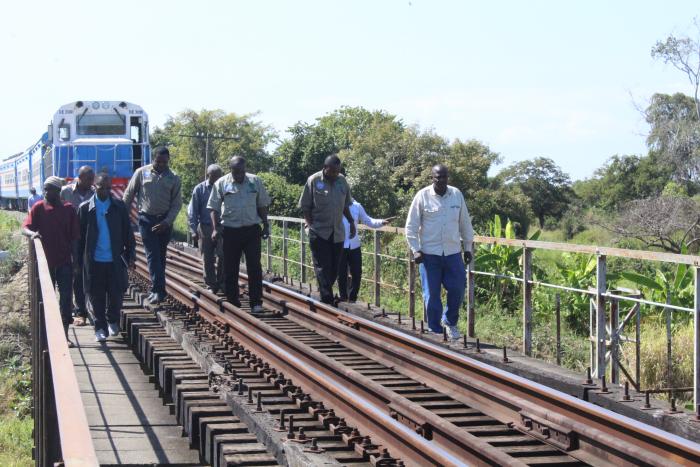
Zambia has embarked on an ambitious $ 1.4 billion modernisation of the Tanzania-Zambia Railway, a strategic corridor that links the heart of Zambia’s copper belt to the Indian Ocean through the Port of Dar es Salaam.
The project, launched jointly by President Hakainde Hichilema, China's Premier li Qiang, and Tanzania Vice President Emmanuel Nchimbi, marks the most significant overhaul of the railway since its construction nearly five decades ago.
President Hichilema reaffirmed that the upgrade is central to Zambia’s long-term economic vision, noting that the railway will unlock the full potential of regional value chains. The revitalised line is expected to carry millions of tonnes of cargo annually, including copper, agricultural commodities, fuel, fertiliser, and consumer goods. According to officials, the restored capacity could eventually exceed 5 million tonnes per year, a dramatic increase from current minimal traffic levels.
Premier Li Qiang described TAZARA as “a historic symbol of China–Africa friendship” and emphasised China’s commitment to seeing the line regain its place as a competitive, reliable regional transport artery.
He noted that the modernisation will boost trade efficiency, reduce logistics costs, and strengthen the region’s access to global markets.
Completed in the 1970s, the 1,860-kilometre railway was originally conceived as a lifeline for Zambia—a land-linked country seeking an independent export route for copper that bypassed apartheid-era restrictions in southern Africa. For years, TAZARA served as a vital link for both Zambia and Tanzania, carrying passengers and bulk freight across rural and urban landscapes.
However, decades of underinvestment, aging infrastructure, and governance challenges saw the once-vibrant railway’s performance decline sharply. Freight volumes fell to a fraction of their designed capacity, with most cargo shifting to road transport.
The new upgrade aims to reverse that trend. Modern signalling systems, new locomotives, rehabilitated tracks, and improved terminals will significantly increase speed, safety, and reliability. For Zambia, the economic benefits include cheaper export routes for copper and other minerals, reduced road congestion, and lower transport costs for imports feeding local industries.
For Tanzania, increased rail traffic means higher port volumes, more revenue from transit traffic, and job creation along the TAZARA corridor.
Both governments view the project as a catalyst for broader regional development. By integrating seamlessly with the Central Corridor and connecting to the Southern African rail networks, the upgraded TAZARA could become a backbone of East–Southern African trade—moving more goods, faster and more affordably, and strengthening the economic resilience of the two nations.