


























Maritime Sector Must Turn Global Rules Into Practical Action
The maritime industry is navigating an increasingly difficult operating environment, yet its biggest challenge may no longer be developing policies. It is turning those policies into practical action.
Geopolitical tensions have demonstrated how quickly maritime trade can be disrupted. Conflicts affecting the Red Sea and Black Sea have forced ships onto longer routes, raising fuel, insurance and operating costs. UNCTAD says rerouting pushed global shipping’s ton-miles to a record 6 per cent increase in 2024, while maritime trade growth is expected to remain weak.
These disruptions do not end at sea. Longer voyages affect the price and availability of food, fuel and fertilizer, while freight-rate volatility puts additional pressure on importers and exporters. For countries such as those from the East African region that depend heavily on maritime trade, safe and predictable shipping is therefore an economic necessity, not simply a maritime concern.
The second challenge is decarbonization. The industry has committed itself to a net-zero future, but the transition requires enormous investment. As of last year, only about 8 per cent of global fleet tonnage could run on alternative fuels.
The green transition, therefore, cannot be achieved through regulation alone. Ships must be renewed, ports adapted, alternative-fuel infrastructure developed and maritime workers trained. The entry into force of the Hong Kong Convention on ship recycling in 2025 also places new demands on the industry and recycling facilities.
But while attention focuses on ships, fuels and emissions, the people operating those ships must not be forgotten.
Seafarer abandonment has reached alarming levels. ITF data shows that 6,223 seafarers were abandoned on 410 ships in 2025, with $25.8 million in wages owed. These are not merely statistics. They represent workers left without pay, adequate provisions, or a reliable route home.
Seafarers are also being asked to operate in increasingly dangerous environments, including conflict zones and severe weather. Maritime policies must therefore protect the human element of shipping as firmly as they regulate vessels.
This brings us to the final challenge: enforcement.
An international convention has little value if it is not translated into effective national laws, competent inspections, adequate port facilities and daily compliance. An ageing fleet makes this even more important. The industry needs regulators with the resources and expertise to enforce standards while working constructively with operators.
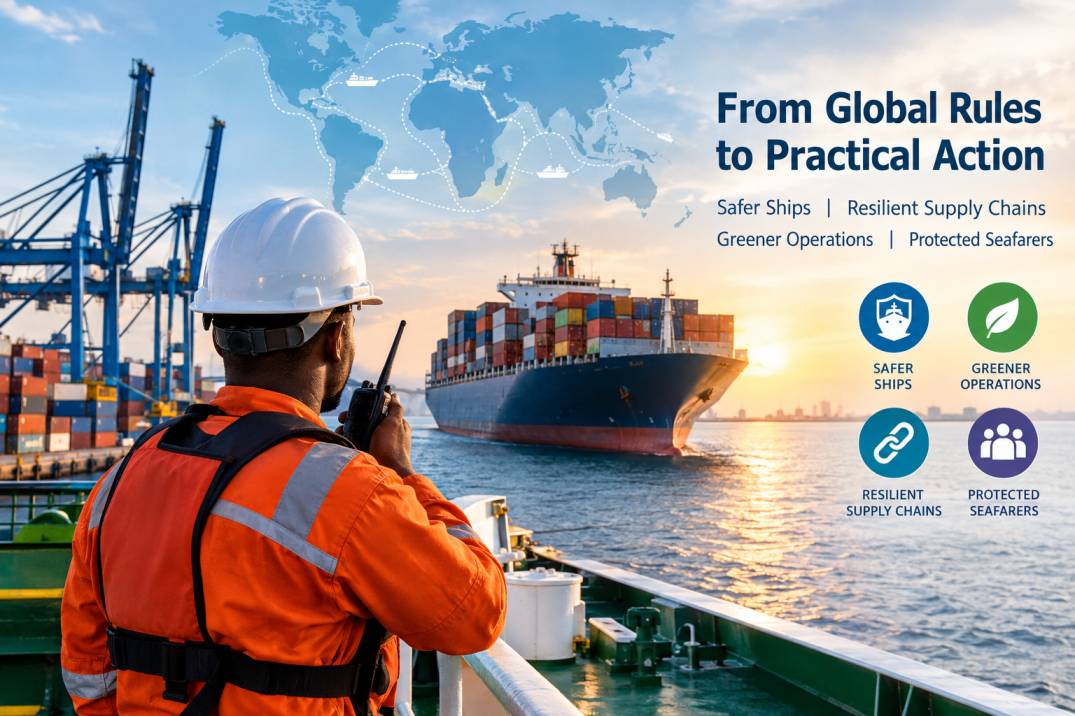
The lesson from today's turbulent maritime environment is straightforward- policy must become practice.
Governments, regulators, ports, shipowners, agents, seafarers and industry associations must work together to turn international commitments into safer ships, resilient supply chains, greener operations and better protection for maritime workers.
Maritime excellence will ultimately not be measured by the number of policies adopted, but by what happens when those policies reach the port, the ship and the seafarer.
By Elijah Mbaru