


























Lamu Refinery Set to Give LAPSSET New Economic Direction
Kenya's planned Dangote refinery will be capable of processing 700,000 barrels of crude oil a day, almost six times the 120,000 barrels per day that the country's South Lokichar fields are projected to produce at peak output.
The mismatch captures one of the biggest challenges facing the US$16 billion project as billionaire Aliko Dangote prepares to break ground on the refinery in Lamu on September 30.
Kenya expects commercial crude production from South Lokichar in Turkana to begin at about 20,000 barrels per day before rising to approximately 120,000 barrels per day by 2032. An 825-kilometre pipeline linking the oilfields to Lamu is also planned.
Even at peak production, however, Kenyan crude would supply only about 17 per cent of the proposed refinery's capacity. The refinery would therefore have to source most of its crude elsewhere, potentially turning Lamu into a major crude-import, storage, refining and petroleum-distribution hub on the Indian Ocean.
Energy experts have identified Kenya, South Sudan and Uganda as possible regional sources, although each option faces infrastructure, commercial or geopolitical challenges. If regional supplies prove insufficient, crude would have to be imported by sea.
The project could change the economic logic and infrastructure priorities of the Lamu Port-South Sudan-Ethiopia Transport (LAPSSET) Corridor, originally conceived as an integrated network of ports, roads, railways, pipelines, airports and industrial facilities linking northern Kenya with South Sudan and Ethiopia.
Dangote's proposal represents a major departure from the refinery originally envisaged under LAPSSET. Kenya's Vision 2030 plans provided for a 120,000-barrel-per-day refinery at Lamu, alongside a crude oil pipeline, refined-products pipeline and oil terminal.
A 700,000-barrel-per-day refinery requires a continuous supply of crude, extensive storage, marine unloading facilities, pipelines, electricity, water, roads and distribution networks. It would also generate much larger volumes of refined products requiring access to domestic and regional markets.
Lamu Port would consequently become a critical part of the refinery's operations. The Kenya Ports Authority (KPA) describes Lamu as an anchor project of LAPSSET. Its first three 400-metre berths are operational, while the ultimate plan is for 23 berths handling containerized, conventional and petroleum cargo.
South Sudan is a potential source, but moving its crude to Lamu would require infrastructure and commercial arrangements. Uganda is another possibility, although Reuters has reported that it has not committed its crude to the Lamu refinery.
International crude imports are therefore likely to remain important. That would mean large tankers calling at Lamu, requiring marine unloading facilities, storage tanks and pipelines linking the port to the refinery.
Oil from international suppliers or neighbouring producers could arrive by sea, be stored and processed at Lamu, with petrol, diesel, aviation fuel, LPG and petrochemical feedstocks distributed across Kenya and neighbouring markets.
The refinery raises an important question for the wider corridor: will it accelerate LAPSSET or force the Government to change the order in which its components are developed?
LAPSSET was designed as an integrated transport and energy corridor rather than simply a port project. Its planned infrastructure includes roads, railway lines, crude and refined-products pipelines, airports, power transmission, resort cities and industrial facilities.
Its petroleum component includes a crude pipeline, refined-products pipeline and oil terminal at Lamu. The refinery was originally intended to form part of this network. Dangote's investment could therefore provide the industrial anchor needed to accelerate supporting infrastructure.
A refinery of this scale will require reliable links to northern Kenya and regional markets. Fuel moving from Lamu to Ethiopia, South Sudan and other markets will need roads, pipelines, storage facilities and potentially rail.
The same infrastructure could serve other LAPSSET users. But the refinery could also create competition for land, port space, energy and public investment. The refinery introduces a large petroleum component into a port originally designed to handle a broader range of cargo.
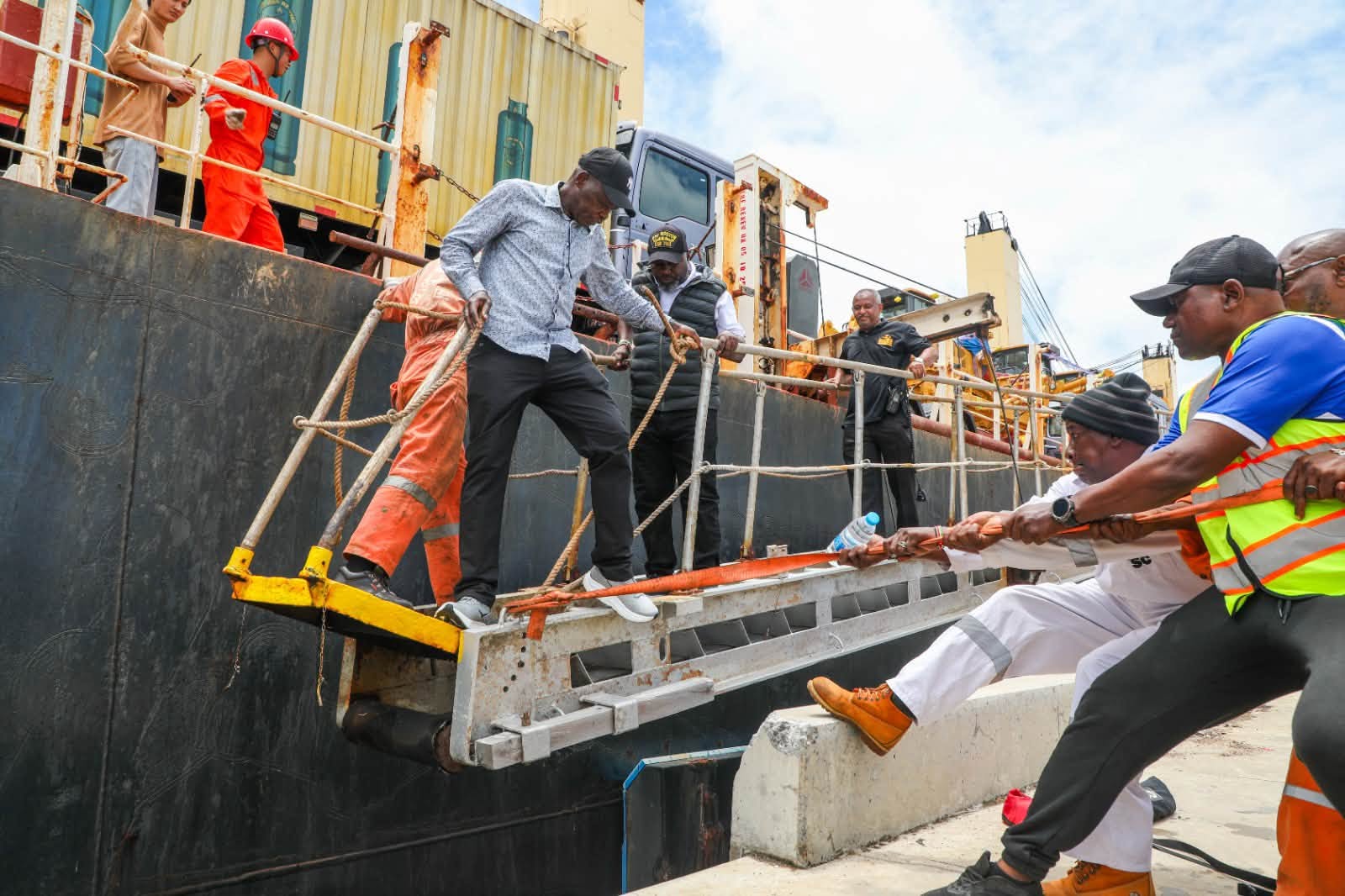
A vessel carrying about 2,930 tonnes of machinery and construction materials has arrived at Lamu, demonstrating the port's role in the refinery's supply chain. The long-term question is whether the port can expand fast enough to handle petroleum cargo without constraining containers, conventional cargo and other commercial activities.
That is significant because LAPSSET was conceived as a multi-purpose regional gateway, not simply an oil terminal. The refinery cannot operate as an isolated coastal facility.
Its commercial viability will depend on the efficient movement of crude into Lamu and petroleum products out to regional markets. This puts renewed attention on the unfinished sections of the LAPSSET corridor linking Lamu with Isiolo, South Sudan and Ethiopia.
For Dangote, these links could open access to markets beyond coastal Kenya. For LAPSSET, the refinery could provide cargo volumes that strengthen the case for completing road and rail infrastructure.
The refinery's industrial footprint will extend beyond petroleum processing. Dangote has said the Lamu complex could generate up to 1,000 megawatts of electricity, with about 500MW potentially supplied to the Kenyan Government.
If realized, this could provide power for industries around the refinery and potentially contribute to the national grid. The project is also planned as an integrated refinery and petrochemical complex, creating feedstocks for industries producing plastics, packaging, pipes and other manufactured goods.
This could encourage manufacturers to establish operations near Lamu, creating an industrial cluster around the refinery. Such development would increase demand for roads, electricity, water, housing and logistics infrastructure.
Kenya's domestic market alone may not absorb the output of a refinery of this scale. The facility is therefore expected to target regional markets including Uganda, Rwanda, South Sudan and Ethiopia.
Its location on the Indian Ocean could provide access to international crude supplies while allowing refined products to be distributed into landlocked East and Central African markets.