











Coxswain Training Gaps Drive Regional Curriculum Validation
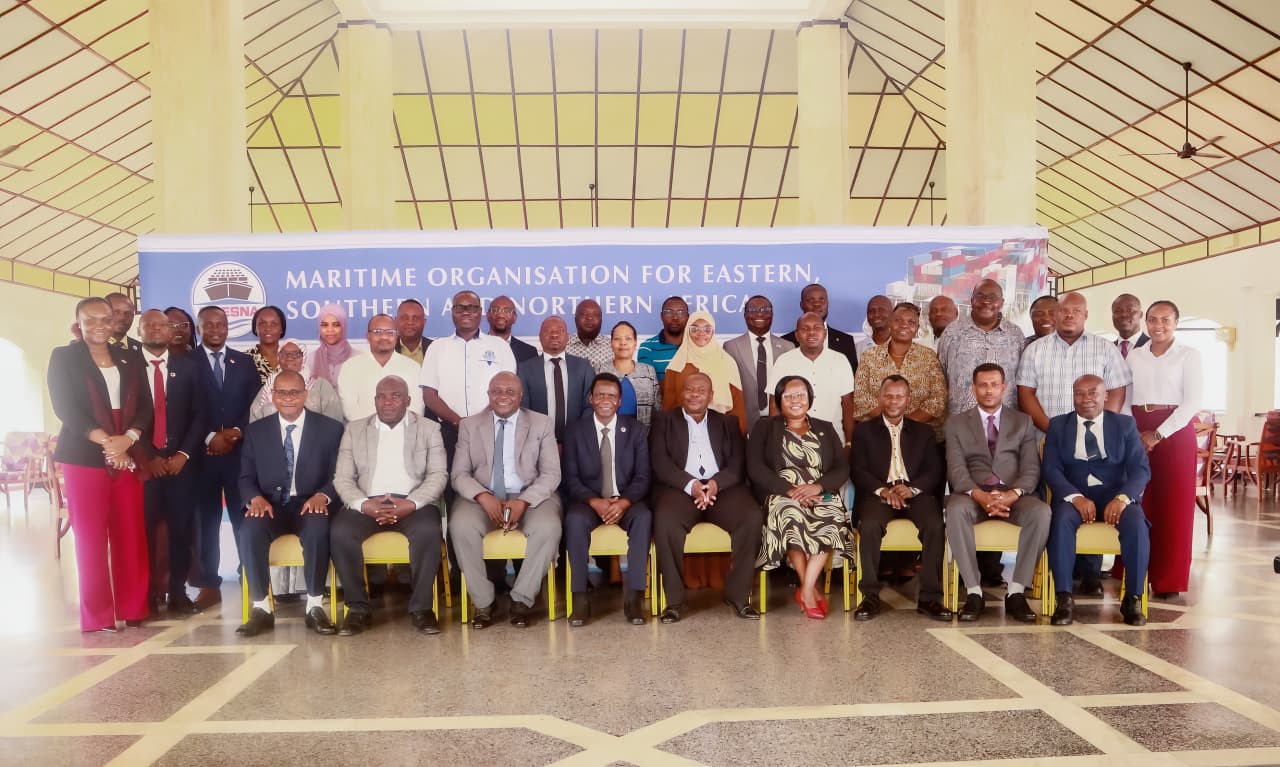
Maritime industry stakeholders have validated a proposed regional curriculum for coxswains, marking a step towards establishing common standards for the training, testing and certification of small-vessel operators across Eastern, Southern and Northern Africa.
The proposed curriculum is intended to address wide disparities in the way coxswains are trained and licensed, gaps that a new assessment says could affect the safety of inland water transport as well as the ability of skilled operators to secure jobs within the region and abroad.
The curriculum is being developed following a Situational Analysis and Training Needs Assessment conducted by the Bandari Maritime Academy (BMA) for the Maritime Organisation for Eastern, Southern and Northern Africa (MOESNA), to assess the status of coxswain training, certification and regulation across the organization’s member states.
The findings were presented by the BMA technical team to industry stakeholders for validation in Mombasa as MOESNA moves towards establishing a harmonized competency-based framework that can be applied across different water transport environments.
Stakeholders at the validation workshop backed the need for member states to put in place legal frameworks to anchor the proposed regional curriculum, recognizing that a harmonized training system will require supporting laws and regulations at the national level.
MOESNA disclosed that it is developing a model Merchant Shipping Act that could assist member states that do not yet have adequate legal frameworks governing maritime training, certification and small-vessel operations.
The assessment found that while small vessels play a critical role in transporting passengers and cargo, supporting fishing and connecting communities that depend on waterways, many countries do not have a clearly defined and standardized pathway for training and certifying the people who operate them.
The result is a fragmented system in which some coxswains undergo formal training while others acquire their skills through experience, short courses, employer-based instruction or informal arrangements.
The report warns that this situation has implications for maritime safety.
“The absence of structured and harmonized training programmes has contributed to inconsistent skill levels among coxswains, leading to increased safety risks, poor vessel handling, and limited professional development opportunities,” it says.
Coxswains occupy a critical position in the water transport chain. They are responsible for navigating and manoeuvring vessels, managing passengers and cargo, communicating with other vessels, responding to emergencies and ensuring that boats are operated safely.
For communities around Africa’s Great Lakes and other inland waterways, their role goes beyond transport. Boats provide links to markets, schools, workplaces and health services, while also supporting fishing and local trade.
This means weaknesses in the skills of those operating the vessels can have consequences far beyond the individual boat.
The scale of the skills gap emerged from the survey. More than half of respondents, 52.8 per cent, said coxswain employees needed “some additional skills” to perform their duties effectively.
Another 13.2 per cent said employees needed “serious upgrading”, while 20.8 per cent said workers needed “completely new training”. Taken together, the findings indicate that 86.8 per cent of respondents considered coxswains to require some level of additional or new training.
The findings point to a workforce that, in the view of respondents, is not consistently equipped with all the competencies required for modern small-vessel operations. The implications are particularly significant because coxswains operate in very different environments.
The training gap is also reflected in the employment market. About 79.6 per cent of respondents said they experienced problems finding coxswains with the required knowledge and skills within MOESNA member states.
The report identifies several factors that restrict access to employment, including inadequate professional skills, limited access to training boats and vessels, lack of basic training, diminishing opportunities, prohibitive training costs and insufficient sea time or practical experience.
Limited government support and competition from more established maritime labour markets were also identified as barriers. For coxswains looking for work outside their home countries, the challenges become broader.
The assessment cites lack of information about international employment opportunities, limited mastery of foreign languages, inadequate soft skills, lack of collaborative agreements, regulatory issues and insufficient sea time among the factors limiting access to overseas employment.
The assessment found significant differences in systems among the countries reviewed. Of the nine MOESNA member states covered in the Maritime Training Institutions assessment, Kenya was the only country where the study confirmed the existence of a formal coxswain curriculum.
There is no common pathway through which a coxswain trained in one MOESNA country can automatically demonstrate that he or she possesses the same competencies as one trained elsewhere.
The proposed curriculum is therefore expected to establish a common core of competencies while allowing countries to adapt training to their particular operating environments.
The competencies identified as priorities include marine communication equipment and distress procedures, emergency response, first aid, firefighting, small-vessel handling, navigation, collision avoidance, voyage planning, weather interpretation, vessel stability, loading and passenger safety.
The assessment also places emphasis on search and rescue, environmental protection, pollution prevention and knowledge of national, regional and international maritime regulations.
The absence of a common regional certification system is compounded by differences in national laws. Kenya has a relatively developed legal framework for inland water transport, anchored in the Kenya Maritime Authority Act, the Merchant Shipping Act and the Lake Victoria Transport Act.
Uganda's Inland Water Transport Act, 2021 provides for vessel registration and licensing, navigation safety, pollution prevention, marine security and regulation of inland water transport.
Tanzania has several laws governing maritime affairs, including the Merchant Shipping Act, Tanzania Ports Act and Tanzania Shipping Agencies Act.
Zambia's system is supported by the Inland Waters Shipping Act and Merchant Shipping Act, covering matters including vessel registration, safety and qualifications of seafarers.
Other countries reviewed have laws dealing with maritime administration, inland waterways and vessel operations.
Stakeholders at the validation workshop, however, pointed to the need to go beyond having legislation on the books by ensuring that member states have legal provisions specifically capable of anchoring the proposed harmonized curriculum and certification system.
This is where MOESNA's work on a model Merchant Shipping Act becomes significant. The model legislation is intended to provide guidance to countries that lack adequate maritime legal frameworks, giving them a basis for developing or strengthening national laws that can support training, testing, certification and licensing.
The approach could also help address one of the practical obstacles to regional recognition where different countries may have different legal requirements even where the competencies expected of a coxswain are broadly similar.
The aim is not to replace national legislation, but to provide a common reference point that can support greater consistency across the region, the report observed.
That legal foundation will be important if the proposed regional certification framework is to move from a training document to an operational system.
The assessment recommends the establishment of a Regional Coxswain Certification Framework for MOESNA member states. This framework would introduce a harmonized, tiered certification system based on competency levels and promote mutual recognition of qualifications.
It would also standardize core curriculum modules covering navigation, safety, engineering, vessel operations and emergency response. The report calls for stronger practical training, investment in training vessels and simulators, mandatory sea-time requirements and the establishment of regional centres of excellence.
The proposed centres would draw on existing capabilities in member states, including Kenya's coxswain training system, Uganda's inland water transport infrastructure and Tanzania's maritime training institutions.
While advocating a common regional framework, the study recognizes that member states face different challenges. For Kenya, it recommends regional satellite training centres on Lake Victoria to decentralize training from the Coast and bring formal instruction closer to inland water operators.
Tanzania is advised to standardize an “Inland Coxswain” endorsement and certification that distinguishes lake operations from ocean-going work. Uganda is encouraged to establish a dedicated Maritime Training Institution to replace informal lakeside training arrangements.
Zambia is advised to develop a formal Barge Master and Coxswain curriculum for the mining and tourism sectors.
For the Democratic Republic of Congo, the study proposes a “Floating School” using mobile trainers to reach remote river communities along the Congo River.
Ethiopia is advised to integrate coxswain certification into its maritime administration, particularly for Lake Tana.
For Burundi, the report proposes a bilateral arrangement with Tanzania's Dar es Salaam Maritime Institute to enable access to recognized certification.
Botswana is advised to formalize standards for water-safari coxswains, with emphasis on passenger safety and environmental protection.
In Malawi, the recommendation is to upgrade the Marine Training College at Monkey Bay with modern simulators and firefighting facilities. The proposed framework also seeks to bridge the gap between formal maritime education and traditional knowledge.
Across Africa's lakes and rivers, many boat operators have acquired navigation and vessel-handling skills through years of experience rather than formal training.
The assessment recommends recognition of prior learning to allow such experience to be assessed and incorporated into formal certification pathways. This could provide a route for experienced operators to enter the formal system without disregarding the knowledge they have accumulated on the water.
At the same time, recognition of prior learning would need to be tied to common safety and competency requirements so that practical experience translates into demonstrable qualifications.
For MOESNA and the stakeholders involved in the validation process, the proposed curriculum is therefore only one part of a wider effort.
Training institutions will need the capacity to deliver it, national authorities will need legal frameworks to support it, operators will need access to practical training, and member states will need mechanisms for recognizing qualifications issued elsewhere.
If these elements are developed together, the regional initiative could provide a more consistent pathway for training and certifying the people responsible for operating thousands of small vessels that support transport, trade, fishing and livelihoods across Africa's inland and coastal waterways.