


























Tanzania’s Maritime Network Takes Shape as Ports, Rail and Technology Converge
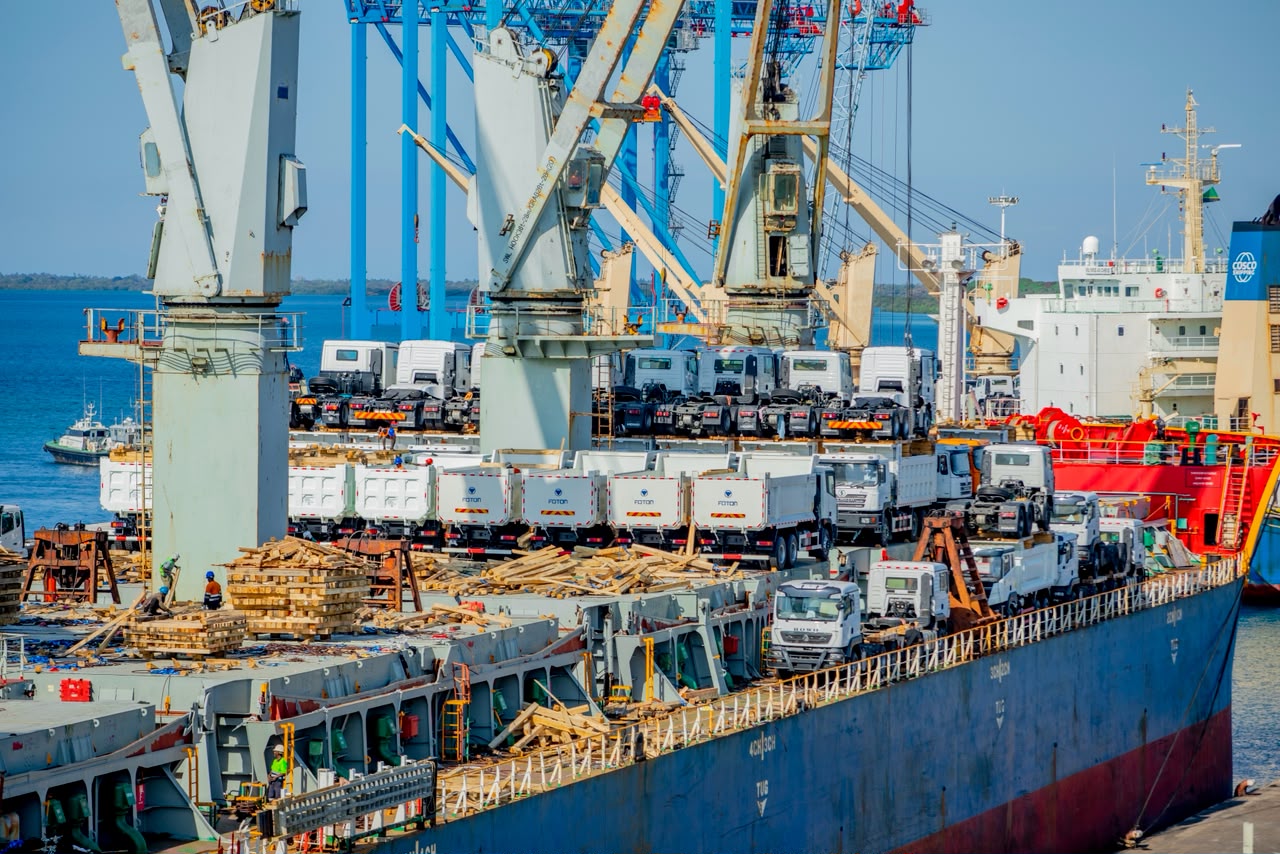
Rising regional cargo volumes are driving demand for more rail services at the inland hub as Tanzania expands the Central Corridor to Great Lakes markets.
Rising regional cargo volumes are driving demand for more rail services at the inland hub as Tanzania expands the Central Corridor to Great Lakes markets.
Tanzania is undertaking a major expansion of its transport and logistics infrastructure, bringing together seaports, railways, dry ports, cargo-handling equipment and digital systems in an effort to strengthen its position as a regional trade and logistics hub.
At the centre of this network is Dar es Salaam, the country's main maritime gateway. But the strategy goes beyond the port, extending north to Tanga, south to Mtwara and Kisiwa Mgao and inland through Kurasini, Kwala, Isaka, Mwanza and eventually Kigoma.
The emerging network is designed around a simple principle: cargo should move efficiently between ships, terminals, railways, dry ports and regional markets rather than depending on individual infrastructure projects operating in isolation.
Dar es Salaam handles about 95 per cent of Tanzania's international trade and serves land-linked markets including Zambia, the Democratic Republic of Congo, Malawi, Rwanda, Burundi and Uganda.
Cargo growth is already putting this network under pressure. Dar es Salaam handled 33.7 million tonnes in the 2025/26 financial year, up from 27.7 million tonnes in 2024/25 and 23.7 million tonnes in 2023/24. The latest figure also means the port exceeded the previous government target of reaching 30 million tonnes by 2030, five years ahead of schedule.
The rapid growth has increased the need for more port capacity, faster cargo handling and reliable connections to inland markets. Dar es Salaam Port is at the centre of this transformation. The Dar es Salaam Maritime Gateway Project has upgraded berths, the entrance channel and turning basin while improving access to the port, rail connections and operational capacity.
The results are becoming visible in cargo-handling performance. In May 2026, the container terminal handled 85,243 TEUs in a single month, at the time the highest monthly container volume recorded at the port.
Tanzania Ports Authority (TPA) attributed the performance to investment in infrastructure, technology and improved operating systems. Modern ship-to-shore cranes, rubber-tyred gantry cranes and terminal operating systems are increasingly being used to speed up the movement of containers through the port.
The Terminal Operating System supports vessel and cargo operations, while online platforms are being used for port services, cargo tracking, operational coordination and customer interaction.
Another important development is the Maritime Single Window, which provides a digital platform through which ships, shipping agents and other maritime stakeholders can submit information required by government agencies during a vessel's arrival, stay and departure.
The wider objective is to reduce duplication, improve coordination among agencies and allow information to be processed electronically rather than through multiple paper-based procedures.
Technology, however, is only one part of the strategy. Tanzania is also changing how port terminals are operated.
The government is using private-sector participation to bring in investment, technology and specialized terminal-management expertise, while TPA continues to oversee the wider port system.
The arrangement is visible at Dar es Salaam, where berths 0 to 7 are operated by DP World and berths 8 to 11 by Tanzania East Africa Gateway Terminal Limited.
A parliamentary inspection in August 2026 examined the two terminal operations as well as the Kurasini Oil Jetty and a new petroleum-storage project. The model reflects Tanzania's effort to combine public infrastructure with private investment and operational expertise.
But increasing cargo volumes are also creating pressure outside the main port. One of the immediate responses is the development of the Kurasini logistics area, which was 98 per cent complete by August 2026. The government has directed TPA to begin operations by November.
The first phase is designed to handle 150,000 TEUs, while the second phase will increase planned capacity to 700,000 TEUs.
The facility is intended to accommodate cargo and trucks outside the main port area, freeing space at the waterfront and allowing some logistics activities to be moved away from the main terminals.
TPA says the decision followed a six-million-tonne increase in cargo in 2024/25. Kurasini is therefore being developed as more than a storage facility. It is intended to operate as an extension of the port, helping to manage cargo flows while reducing pressure on waterfront space.
The next link in the network is Kwala Inland Container Depot in Vigwaza, Coast Region. Kwala occupies a 502-hectare site and is connected to the SGR. Its role is to move some cargo-handling activities away from Dar es Salaam and bring them closer to inland markets.
The facility can receive one to two SGR trains a day, hold about 3,500 containers at a time and handle an average of 823 containers daily. This translates to about 300,000 containers annually.
TPA estimates that Kwala could help reduce congestion at Dar es Salaam Port by about 30 per cent. Its regional role is also significant. The DRC, Zambia, Malawi, Burundi, Rwanda and Uganda have been allocated areas within the dry port.
In April 2026, the government handed over space to the DRC to develop its own dry-port facility at Kwala. This points to a broader ambition: Tanzania wants Kwala to serve not only Tanzanian cargo but also freight moving through the Central Corridor to neighbouring countries. The key question will be whether Kwala can attract enough cargo from road transport to make rail the preferred inland connection for a larger share of regional freight.
Rail is the backbone of Tanzania infrastructural strategy. The first phase of the Dar es Salaam-Mwanza Standard Gauge Railway covers 1,219 kilometres and is being developed in five sections. The 300-kilometre Dar es Salaam-Morogoro section and the 422-kilometre Morogoro-Makutupora section have been completed.
Construction is continuing on the 294-kilometre Makutupora-Tabora section, the 130-kilometre Tabora-Isaka section and the 249-kilometre Isaka-Mwanza section.
Once complete, the railway will create a continuous modern rail connection between Dar es Salaam and Mwanza, strengthening the port's reach into the Lake Victoria basin and the wider Great Lakes region.
SGR services are already operating between Dar es Salaam and Dodoma. In September 2026, Tanzania Railways Corporation (TRC) said construction from Makutupora to Mwanza was progressing according to plan, with completion and the start of SGR operations targeted for the end of 2028.
The importance of the railway to the maritime network is clear. A reliable rail link to Isaka and Mwanza would extend Dar es Salaam's cargo catchment deep into the Great Lakes region.
Tanzania is also extending the railway towards Lake Tanganyika. In July 2026, President Samia Suluhu Hassan launched construction of the 506-kilometre Tabora-Kigoma SGR, a project valued at about US$2.74 billion, or approximately TSh7.4 trillion.
The line is expected to strengthen the Central Corridor's connections to Burundi, eastern DRC and the Lake Tanganyika region. Together, the Mwanza and Kigoma connections would give Dar es Salaam access to two major Great Lakes transport systems: Lake Victoria and Lake Tanganyika.
This could expand the geographical reach of the Central Corridor and increase the role of Tanzanian ports in regional trade.
Dar es Salaam, however, is not the only maritime gateway being developed. To the north, Tanga is being positioned as a complementary gateway.TPA lists Tanga Port as having two berths, 450 metres of quay, a 13-metre draft and annual capacity of three million tonnes.
Tanga is also becoming an important energy gateway. The Chongoleani crude-oil terminal is being developed as the maritime endpoint of the East African Crude Oil Pipeline (EACOP), providing Uganda with an export route through Tanzania.
The government is also planning a third phase of Tanga Port development involving three additional berths with a combined length of 900 metres, beginning with a 300-metre berth.
At the southern end of the country, Tanzania is investing more than TSh590 billion- US$223.1 million, in Mtwara Port and the new Kisiwa Mgao Port. The investment is aimed at strengthening the Southern Corridor and increasing trade with southern Tanzania and SADC markets.
Kisiwa Mgao is being developed to handle large volumes of bulk and other cargo, including coal and raw materials. This is expected to allow Mtwara to focus on other categories of cargo while providing additional capacity for the southern maritime gateway.
By July 2026, construction of Kisiwa Mgao had reached 43 per cent, according to TPA. Mtwara is already handling more than 1.2 million tonnes of coal annually, with coal accounting for more than 60 per cent of the port's revenue collections.
Infrastructure improvements have also reduced the average vessel stay at Mtwara to about 72 hours, according to TPA. The combination of Mtwara and Kisiwa Mgao is therefore intended to provide a stronger maritime gateway for southern Tanzania and improve connections with Malawi, Mozambique and the wider SADC region.
Energy logistics form another important part of Tanzania's maritime expansion. At Dar es Salaam, a new petroleum reception and storage project is being developed at Kigamboni at a construction cost of TSh678.6 billion- US$256.5 million, excluding a further TSh23.2 billion- US$8.8 million contract for project-management consultancy.
The facility will have 15 storage tanks with a total capacity of 378,000 cubic metres. These will include six diesel tanks, five petrol tanks, three aviation-fuel tanks and one interface tank.
TPA says the project is expected to reduce petroleum-vessel waiting time from 22 days to seven days. Vessel service time is expected to fall from seven days to one day once the facility is completed.
This investment would strengthen Dar es Salaam's role as not only a container and general cargo gateway but also a regional petroleum logistics hub. Taken together, these developments show that Tanzania is building a connected maritime and logistics network rather than expanding individual ports in isolation.
Dar es Salaam remains the principal gateway, but its role is increasingly supported by a network of complementary facilities.
Tanga provides a northern maritime and energy route. Mtwara and Kisiwa Mgao are strengthening the southern gateway. Kurasini and Kwala are creating inland interfaces around Dar es Salaam, while Isaka and Mwanza will extend the Central Corridor towards Lake Victoria.
Kigoma will provide another connection towards Lake Tanganyika and the markets of Burundi and eastern DRC. The railway, ports, dry ports and digital systems are therefore becoming parts of the same logistics chain.
The next test for Tanzania will be whether these investments can work together efficiently enough to move growing volumes of cargo from the coast to inland markets at competitive cost and with fewer delays.
For the Central Corridor, that will determine whether the country's expanding maritime infrastructure becomes simply a larger port network or a genuinely integrated regional logistics system.