


























Mozambique, Botswana Deepen Corridor Links as Chapo Visits Gaborone
Mozambique and Botswana are seeking to deepen their economic ties by expanding the use of Mozambican ports and transport corridors by the land-linked Southern African country, potentially opening new cargo flows for Maputo, Nacala and the proposed Ponta Techobanine port.
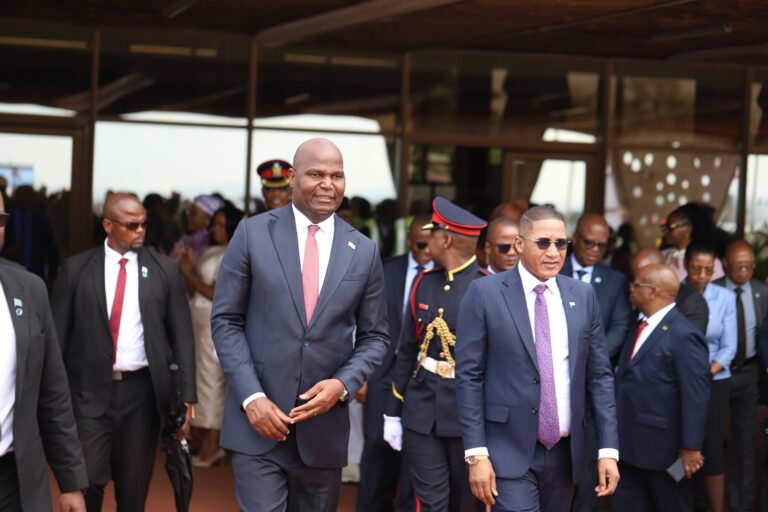
Mozambique President Daniel Chapo began a three-day State Visit to Botswana on September 28, with transport, energy, trade and regional infrastructure high on the agenda.
The visit came days after the ninth Botswana-Mozambique Joint Permanent Commission on Cooperation (JPCC) meeting in Gaborone, where the two countries discussed accelerating the Limpopo Development Corridor and Ponta Techobanine project.
For Botswana, the relationship offers an opportunity to diversify access to the Indian Ocean and reduce reliance on established routes through neighbouring countries. For Mozambique, increased transit cargo could generate additional business for ports, railways, roads, storage facilities, fuel suppliers and logistics operators.
Botswana depends on neighbouring countries for access to international markets. Mozambique, with its long Indian Ocean coastline and established port network, provides several potential routes.
The two countries have already discussed the use of the Port of Maputo and Nacala for Botswana's imports and exports. During President Duma Boko's visit to Mozambique in March 2025, he toured the ports of Maputo and Nacala and inspected the area earmarked for Ponta Techobanine.
The proposed Techobanine development is intended to provide a deep-water maritime outlet connected to Botswana and Zimbabwe through a railway network of about 1,700 kilometres. Botswana previously estimated the investment at approximately US$6.5 billion.
The project is designed to handle heavy cargo, including minerals, and could create a new trade route between the interior of Southern Africa and the Indian Ocean.
However, its development faces significant requirements, including financing, cross-border regulatory coordination, railway construction and the establishment of sustainable cargo volumes.
The project involves Botswana, Mozambique and Zimbabwe, making coordination among the three governments critical to its progress.
The Limpopo Development Corridor is another priority. Greater use of multiple routes could provide Botswana with alternatives for moving goods while allowing Mozambique to increase utilization of its transport infrastructure.
Botswana already uses Mozambican infrastructure. In March 2025, Botswana Oil chief executive Meshack Tshekedi said goods from Botswana were being transported through the Port of Maputo and pointed to opportunities to export Botswana coal through Mozambican facilities.
Botswana Oil also identified Mozambican ports as potential channels for importing petroleum products from the Middle East.
Such trade could generate activity beyond the port gates, supporting demand for rail and road transport, fuel storage, customs clearance, warehousing, maintenance and other logistics services.
The opportunity comes as Botswana seeks to diversify its trade routes and reduce logistical dependence on South Africa. Official data show that South Africa accounted for 63.1 per cent of Botswana's imports in October 2025, while Mozambique accounted for 2.6 per cent.
In June 2026, Botswana imported goods worth about US$550 million and exported goods worth approximately US$374 million, resulting in a trade deficit of about US$176 million.
For Mozambique, capturing a larger share of Botswana's cargo would strengthen the economic case for investment in port and corridor infrastructure. But competition between regional routes means Mozambican corridors will have to offer competitive costs, transit times, reliability and border clearance.
Maputo is particularly positioned to serve Botswana through existing regional connections, while Nacala offers another Indian Ocean outlet. Techobanine represents a longer-term option that could create additional capacity for mineral and other heavy cargo.
Energy is also emerging as an important component of the relationship. During Boko's 2025 visit, the two countries discussed energy cooperation, including the Maputo Thermal Power Station.
The possibility of importing petroleum products through Mozambican ports further links energy security to corridor development. Efficient supply chains would require a combination of port terminals, storage facilities, railways, roads and distribution networks.
The ninth JPCC meeting also reviewed 18 draft agreements and memoranda covering areas including trade, tourism, education, health, science and technology and other sectors. The two governments are considering upgrading the existing cooperation mechanism to a Binational Commission.
The focus, however, is increasingly shifting from signing agreements to implementing projects. For Mozambique, the expansion of Botswana-related cargo would reinforce its position as a gateway for land-linked economies in Southern Africa. For Botswana, access to competing Indian Ocean routes could provide additional options for importing essential goods and exporting minerals and other commodities.
The success of this strategy will ultimately depend on infrastructure investment, commercially viable freight volumes, efficient border procedures and competitive port and transport charges.