



























Greener Freight: Northern Corridor Targets Trucks, Drivers
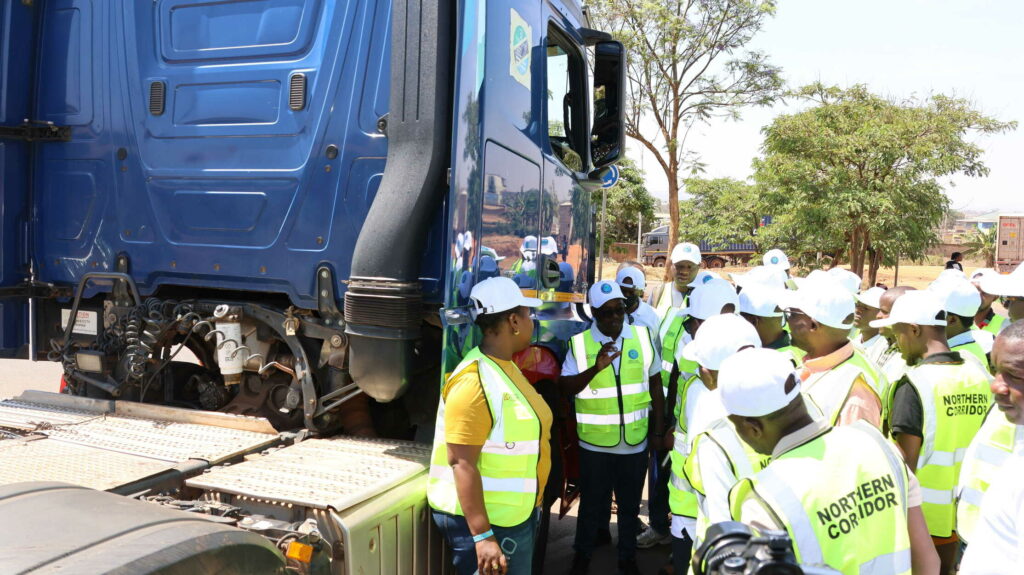
The Northern Corridor is stepping up efforts to cut emissions from freight transport through specialized training of truck drivers and plans to strengthen coordination among governments, transport operators and other industry stakeholders.
The Northern Corridor Transit and Transport Coordination Authority (NCTTCA) has concluded a four-day Eco-Driver Training and Sensitization Workshop in Kigali, Rwanda, while moving towards a more coordinated stakeholder approach to implementing its green freight agenda.
The training brought together truck drivers, fleet managers, transport operators, policymakers and regulators, with participants taught practical techniques aimed at reducing fuel consumption, improving road safety and lowering greenhouse gas emissions.
The initiative is part of the implementation of the Northern Corridor Green Freight Strategy 2030, which targets a 10 per cent improvement in fuel efficiency, a 10 per cent reduction in carbon dioxide emissions intensity and a 12 per cent reduction in particulate matter, black carbon and nitrogen oxide emissions by 2030.
NCTTCA officials said changing driver behaviour could deliver significant environmental gains even before new vehicle technologies are widely adopted.
Drivers were trained in smooth acceleration and braking, optimal gear shifting, speed management, anticipation of traffic and road conditions, vehicle handling and other fuel-efficient driving practices.
The practical, on-road component allowed drivers to apply the lessons in real driving conditions.
Cross-border truck driver Jacqueline Dushimirimana, who operates on routes linking Kigali with Mombasa and Dar es Salaam, said the training had made drivers more conscious of their contribution to air pollution.
“We were made aware that we were among the people contributing to air pollution,” she said.
Another driver, Twizeyimana Abdalah of Trinity Logistics, said fuel-efficient driving could simultaneously reduce emissions and lower operating costs for transport companies.
The training comes as the authority seeks broader stakeholder involvement in tackling emissions across the corridor, including through the formation of a stakeholder committee to coordinate green freight interventions.
Such coordination is expected to bring together government agencies, regulators, transporters, fleet owners, drivers and other players whose decisions affect freight emissions along the corridor.
The need for stronger coordination has been underscored by the scale of freight movement. The Northern Corridor handles about 75,000 tonnes of road freight daily, involving between 2,000 and 3,000 trucks moving cargo from the Port of Mombasa to Kenya and other East African countries.
A 2024 baseline assessment estimated emissions from road freight on selected Northern Corridor routes in Kenya, Uganda and Rwanda at about 3.76 million tonnes of carbon dioxide equivalent. Rwanda accounted for approximately 340,000 tonnes.
NCTTCA Secretary General Dr John Deng said the authority has also secured $200,000 (about Sh26 million) in seed funding from the United Nations Environment Programme to support the green transition.
The funding is expected to help make the freight transport sub-sector electric-vehicle ready by 2030, with the authority targeting net-zero emissions by 2050.
Deng said the initial funding had helped attract additional programmes, bringing the total funding mobilized for green freight initiatives to about $1.6 million.
The authority will use part of the funding to update the Northern Corridor freight emissions accounting framework and improve collection and localization of greenhouse gas data along routes in Kenya, Uganda and Rwanda.
The data will support governments in developing policies to shift freight transport away from fossil fuels and towards cleaner technologies.
NCTTCA will also study the feasibility of electrifying selected operations at the Port of Mombasa, where controlled fleets and equipment could provide an initial opportunity for the adoption of electric vehicles.
The combination of driver training, stronger stakeholder coordination, better emissions data and investment in cleaner technologies is expected to accelerate the Northern Corridor's transition towards safer, greener and more efficient freight transport.