

























Kenya’s 10 Million Tonnes Rail Cargo Haul Offers Uganda Lessons
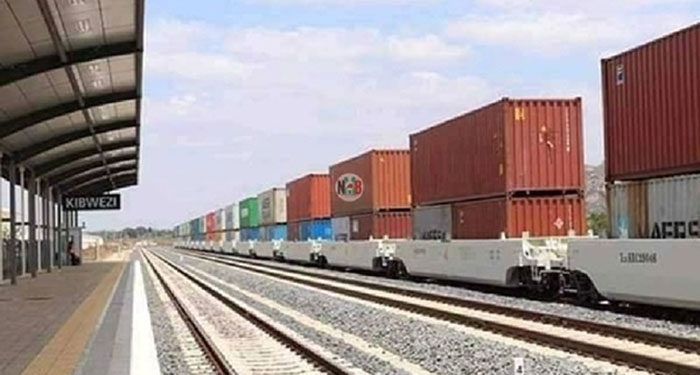
Kenya and Uganda are seeking to deepen railway cooperation as part of efforts to strengthen regional trade and improve cargo movement across East Africa and the wider Great Lakes region.
Kenya Railways managing director Philip Mainga said Kenya was already handling more than 10 million tonnes of cargo through its Standard Gauge Railway (SGR) and Meter Gauge Railway (MGR), with the two networks operating as complementary systems.
Mr Mainga said greater regional integration of railway infrastructure would help lower transport costs, improve supply-chain efficiency and strengthen East Africa’s position as a regional trade and logistics hub.
He spoke when a delegation of Ugandan Members of Parliament’s Committee on Physical Infrastructure recently visited Kenya Railways for a benchmarking tour of its SGR and MGR operations.
“Regional collaboration is non-negotiable. East African countries must work together to bring efficiency to the transportation of goods and services to our people,” Mr Mainga said.
The Ugandan delegation, led by Parliamentary Committee on Physical Infrastructure chairperson Mwine Mpaka, said Uganda was keen to learn from Kenya’s experience as it rehabilitates and modernizes its railway network.
Mr Mpaka said Uganda’s strategic location made it an important transit and distribution hub for cargo destined for the Democratic Republic of Congo (DRC), South Sudan, Rwanda and Burundi.
He said efficient rail connectivity with Kenya would be critical in unlocking Uganda’s potential as a gateway to the Great Lakes region while facilitating faster and more cost-effective movement of cargo.
Uganda is undertaking rehabilitation of its railway infrastructure, including replacing steel sleepers with concrete ones and plans to rehabilitate the Malabar-Tororo Meter Gauge Railway section.
The legislators said Kenya’s experience in operating, maintaining and integrating SGR and MGR offered important lessons as Uganda seeks to restore and expand its railway network.
Mr Mainga said Uganda was a critical logistics hub and called for closer cooperation between the two countries to improve regional supply chains. Kenya Railways is also seeking to transform its railway corridors into economic corridors by developing commercial and logistics hubs along the network.
The corporation plans hubs along the SGR corridor in Voi, Konza, Athi River, Bomet, Nyamira and Malaba, among other locations. Under the MGR network, similar facilities are planned in Voi, Taveta, Nakuru, Eldoret and Malaba.
“With adequate land along the railway network, Kenya Railways is turning the rail corridor into an economic corridor,” Mr Mainga said.
The proposed hubs are expected to support warehousing, manufacturing, distribution and other commercial activities, creating new economic centres along railway corridors.
The talks also examined the East Africa SGR Master Plan, approved by East African Community Heads of State, which seeks to improve railway connectivity between Kenya, Uganda, the DRC, South Sudan and Burundi.
Mr Mainga said combining rail and lake transport could further expand the region’s freight capacity, particularly through Lake Victoria.
Cargo could be moved through the lake using MV Uhuru I and MV Uhuru II, with improved connections between the Port of Kisumu in Kenya and Port Bell and Port Jinja in Uganda.
The Kenyan delegation also briefed the MPs on the progress of the Naivasha-Kisumu SGR Phase 2B and 2C, which Mr Mainga said was on course.
For Uganda, the modernization of its railway system will also depend on developing a skilled workforce capable of operating and maintaining modern infrastructure.